
Solar Lead Generation for Homeowners with Shade Issues
Master solar lead generation for homeowners with shade issues. Call (510)-663-7016 to qualify shaded properties and cut wasted leads.

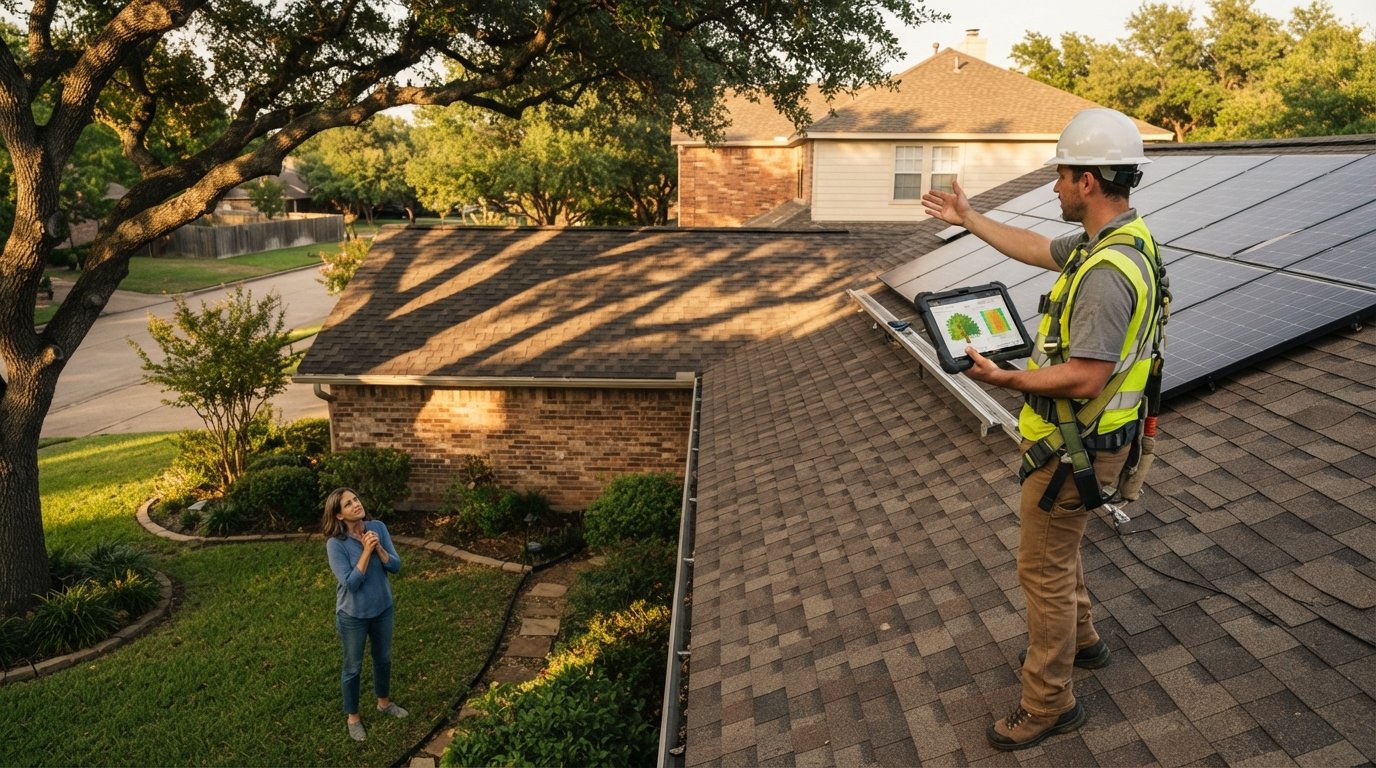
Shade is the silent deal killer in residential solar. A homeowner with a heavily shaded roof may still want solar, but if your lead generation process does not account for tree cover, roof orientation, and shading patterns, you will burn budget on appointments that never convert. Solar lead generation for homeowners with shade issues requires a different playbook, one that prioritizes pre-qualification, honest messaging, and smart routing over raw volume. The good news: shaded properties are not dead ends. With the right qualification questions, imagery checks, and alternative offers, you can turn a challenging segment into a profitable niche.
Why Shade Issues Derail Solar Leads (and How to Stop It)
Most solar lead forms ask for zip code, monthly bill, and homeowner status. That is not enough. A homeowner paying $250 per month in a shaded neighborhood may look like a prime lead, but if their roof is covered by mature oaks, a traditional panel installation is unlikely to pencil out. The result is wasted appointments, frustrated sales reps, and a rising cost per acquisition. The fix starts with rethinking what a qualified lead looks like.
Shading affects solar production in ways that are not always obvious to homeowners. A single large tree can reduce output by 20 to 50 percent depending on its position and the roof angle. Sales reps who arrive unprepared waste hours on site assessments that end with a no. Lead generators who screen for shade upfront protect everyone: the advertiser, the publisher, and the homeowner who avoids a pointless sales pitch.
To reduce wasted leads, build shade screening into your intake process. This does not mean rejecting every property with a tree. It means asking the right questions and using available imagery tools to segment leads into three buckets: clear roof, manageable shade, and heavy shade. Each bucket gets a different follow-up path.
- Clear roof: Standard solar offer, priority routing to installation partners.
- Manageable shade: Route to reps trained in microinverters, optimizers, or ground-mount options.
- Heavy shade: Pivot to community solar, battery-only offers, or energy efficiency products.
This triage approach is the foundation of effective solar lead generation for homeowners with shade issues. It also aligns with how performance marketing platforms like AstoriaLeads structure lead distribution: quality rules, geo-targeting, and real-time routing determine which buyer receives which lead. When shade data is part of the payload, buyers can bid differently and publishers can price accordingly.
Pre-Qualifying Rooftop Suitability Before the Lead Is Sold
Pre-qualification is where most solar lead generation for homeowners with shade issues succeeds or fails. The goal is not to become a roofing inspector; it is to gather enough signal to route the lead intelligently. Start with a short set of questions that any homeowner can answer in under a minute. These questions should feel conversational, not like a technical survey.
- How would you describe the tree cover around your home? (Options: full sun, a few trees, heavy shade.)
- Do you have large trees within 30 feet of the roof?
- Which direction does your roof mostly face? (South, east, west, north, not sure.)
- Are you open to ground-mounted panels or a carport solar setup?
- Would you consider community solar if rooftop panels are not ideal?
These five questions do two things. First, they give your routing engine enough data to score the lead. Second, they set expectations with the homeowner. A person who answers "heavy shade" and "not open to alternatives" is likely a poor fit for a standard installation offer, but they may still be a valuable lead for a community solar provider. The key is to capture that signal before the lead is sold, not after a sales rep drives 40 minutes to the property.
Imagery is the second layer of pre-qualification. Satellite and aerial imagery tools can flag tree canopy density, roof obstructions, and orientation without a site visit. Several platforms offer API access to this data, and integrating a simple shade score into your lead form can dramatically improve lead quality. Even a manual review of Google Earth imagery by a call center agent adds value. The goal is not perfection; it is a consistent, repeatable screening step that separates high-probability leads from long shots.
For advertisers buying solar leads, ask your lead provider how shade data is captured and passed. If the answer is vague, you are likely paying for leads that have not been screened. Platforms that support Ping & Post distribution allow buyers to receive lead data in real time and decide whether to accept based on their own criteria, including shade indicators. That level of control is essential when your installation partners have specific production thresholds.
Messaging That Resonates with Shade-Concerned Homeowners
Homeowners with shaded roofs often have one of two reactions: they assume solar will not work for them, or they worry a salesperson will pressure them into a system that underperforms. Both reactions are addressable with the right messaging. The worst approach is to ignore shade entirely and hope the sales rep handles it. The best approach is to acknowledge the concern directly and position your offer as a solution, not a gamble.
Start with transparency. A landing page or ad that says "Solar works even with some shade" is more credible than one that promises maximum savings regardless of conditions. Mention the technologies that mitigate shading: microinverters, DC optimizers, and strategic panel placement. You do not need to explain the engineering; you need to signal that you understand the problem and have options. Homeowners who feel heard are more likely to complete a form and take a call.
For leads that are clearly heavy shade, do not force a rooftop solar pitch. Instead, pivot the conversation to alternatives that still deliver value. Community solar subscriptions allow homeowners to benefit from solar without installing panels on their property. Battery storage paired with time-of-use rates can reduce bills even without generation. Energy efficiency upgrades, such as heat pump water heaters or attic insulation, offer savings that do not depend on sun exposure. Each of these is a legitimate offer that can be marketed through the same lead generation channels, often with less competition and better conversion rates.
When writing ad copy or scripting calls for solar lead generation for homeowners with shade issues, use language that qualifies without discouraging. Phrases like "Find out if your roof qualifies" and "Options for shaded properties" invite engagement. Avoid absolute claims like "Guaranteed savings" that set unrealistic expectations. The most effective campaigns combine curiosity with honesty, and they follow up with a clear next step, whether that is a remote assessment or a short call with a shade specialist.
Using Imagery and Qualification Data to Cut Wasted Leads
Data is the difference between a lead generation campaign that scales and one that bleeds budget. For shaded properties, three data sets matter most: canopy density, roof orientation, and homeowner openness to alternatives. Each can be captured or inferred without a site visit, and each should be attached to the lead record so buyers can make informed decisions.
Canopy density is the hardest to capture through a form, which is why imagery tools are so valuable. A simple shade score derived from satellite imagery can be appended to a lead in real time. If your platform supports custom fields or lead tags, use them. Publishers who pass shade scores alongside standard contact data can command higher payouts because advertisers know the lead has been screened. Advertisers who receive shade scores can adjust bids or route leads to different sales teams.
Roof orientation is easier: most homeowners can answer a simple question about which side of the house gets the most sun. Combine that with a follow-up about tree location, and you have a workable proxy for production potential. Homeowner openness to alternatives is the most overlooked data point. A lead who says "I would consider community solar" is not a failed rooftop lead; they are a qualified lead for a different offer. Capturing that preference opens up monetization paths that most campaigns ignore.
To make this practical, build a lead scoring model with three inputs: shade severity, roof orientation, and alternative openness. Score each from 1 to 3 and sum the results. Leads with high scores go to premium buyers. Leads with low scores route to alternative offers or nurture sequences. This model does not require machine learning; a spreadsheet and a routing rule will do. The point is to stop treating all solar leads as equal and start matching offers to property realities.
Routing Shaded Leads to the Right Buyer or Offer
Once a lead is screened for shade, the next step is routing. Traditional solar lead distribution sends every lead to the highest bidder, which is a recipe for wasted appointments when shade is a factor. A better model uses conditional routing: if shade score is high, route to buyer A; if shade score is low but alternative openness is high, route to buyer B; if neither, suppress or nurture. This is where performance marketing platforms earn their keep.
Pay Per Call campaigns are particularly well suited to shaded properties because a live conversation can clarify details that a form cannot. A homeowner who selects "heavy shade" on a form may still have a viable roof section that a trained agent can identify through questions. Call routing with IVR can direct shade-concerned homeowners to a specialized team, while clear-roof leads go to standard installation queues. Call quality pricing based on duration and outcome further protects advertisers from paying for unqualified conversations.
For publishers, the opportunity is to diversify offers. Instead of sending all solar traffic to one rooftop installation campaign, test community solar, battery storage, and energy efficiency offers alongside traditional solar. Shaded properties often convert better on these alternatives because the homeowner's primary concern (will solar work for me?) is addressed directly. Publishers who build shade-aware funnels can monetize traffic that competitors write off, and they can do it without misleading anyone.
Platforms that support Ping & Post distribution give buyers real-time control over which leads they accept. When shade data is included in the ping, buyers can set rules: accept leads with shade score below X, reject leads with no alternative openness, and so on. This level of granularity reduces waste on both sides of the transaction. It also creates a feedback loop: publishers learn which shade profiles convert, and advertisers learn which profiles produce signed contracts. Over time, the entire ecosystem gets smarter about solar lead generation for homeowners with shade issues.
Compliance and Trust When Marketing to Shaded Properties
Any discussion of solar lead generation must include compliance, and shade-related messaging is no exception. Homeowners who are told their property is a good fit for solar, only to learn later that shade makes it a poor investment, are likely to file complaints. The Federal Trade Commission has taken action against solar companies for deceptive savings claims, and state regulators are increasingly scrutinizing lead generation practices. The safest approach is to under-promise on production and over-deliver on options.
Consent is the other critical piece. If you are collecting phone numbers for Pay Per Call campaigns, you need clear, documented consent that covers the specific offers you plan to present. A homeowner who agrees to be contacted about rooftop solar may not expect a call about community solar, even though both are solar-related. Use separate consent language for alternative offers, or make the scope of consent broad enough to cover the offers you actually present. When in doubt, consult legal counsel and follow the strictest applicable rules.
Transparency also builds trust. A short disclosure on your landing page explaining that shade may affect system performance, and that alternatives exist, sets the right expectations. It may reduce form completions slightly, but it improves lead quality and reduces downstream complaints. In a vertical where trust is a competitive advantage, that trade-off is almost always worth it.
Building a Shade-Aware Solar Lead Generation Strategy
Solar lead generation for homeowners with shade issues is not a niche add-on; it is a discipline that improves every part of your funnel. By screening for shade upfront, messaging honestly, using imagery and data to score leads, and routing to the right offer, you can turn a challenging segment into a reliable source of revenue. The homeowners are there, and many of them want to participate in the energy transition. They just need a path that fits their property.
Start small. Add three shade questions to your form. Pull satellite imagery on a sample of leads and compare conversion rates. Test a community solar offer against a rooftop offer for the same traffic. Measure cost per appointment, not just cost per lead. As you gather data, refine your scoring model and routing rules. The campaigns that win in this space are the ones that treat shade as a signal, not a disqualifier.
Whether you are an advertiser buying solar leads, a publisher monetizing home improvement traffic, or a network owner building offers, the same principles apply: qualify early, communicate clearly, and route intelligently. Shade is not the enemy of solar lead generation. Ignoring it is.