
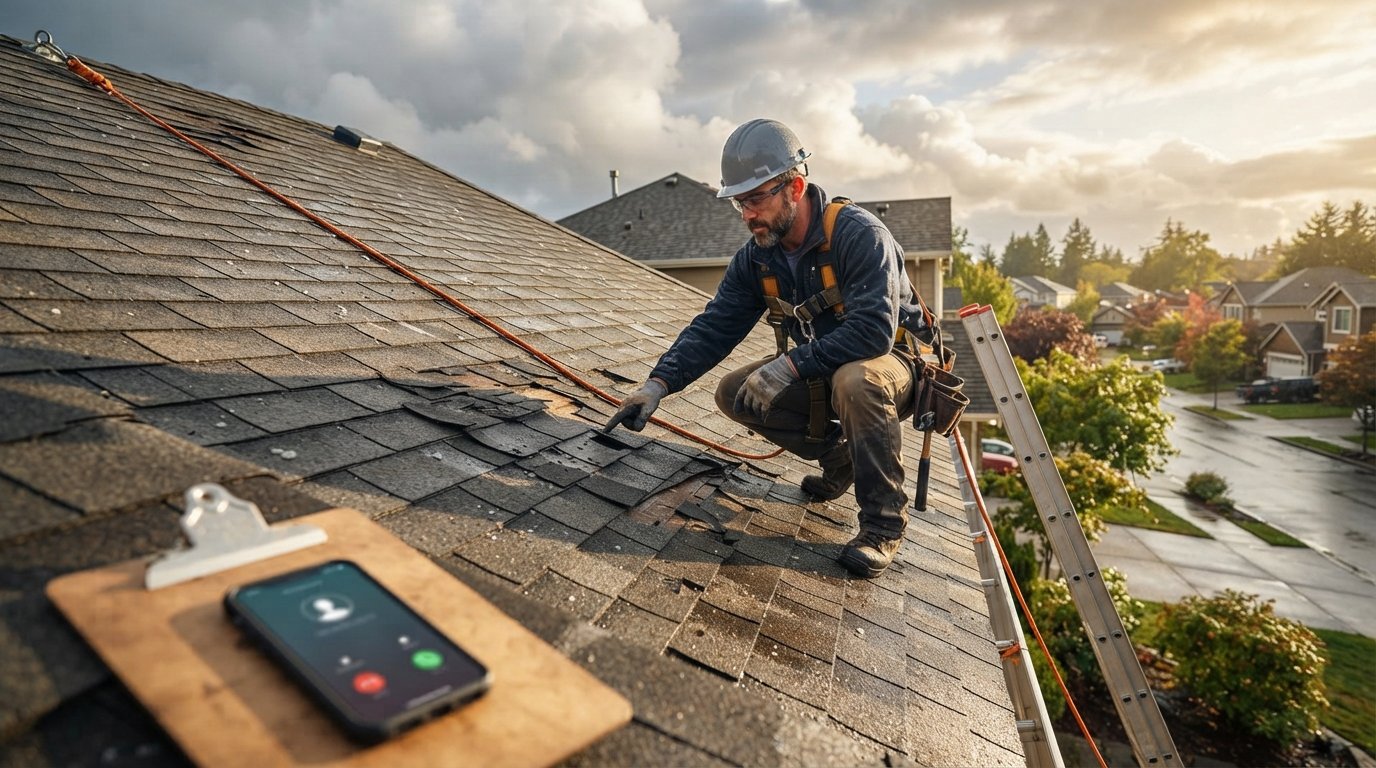
Home Improvement Leads for Roofing Contractors: A 2026 Guide
Master home improvement leads for roofing contractors with proven tactics for seasonal demand, lead qualification, and Pay Per Call. Call (510)-663-7016 to scale today.

Storm season hits, and your phone should be ringing off the hook. But if you are like most roofing contractors, the leads you get from shared marketplaces are often recycled, out of your service area, or just price shoppers who never intend to book. The result: wasted time, wasted ad spend, and a pipeline that looks full but converts to nothing. The solution is not more leads; it is better leads. That means understanding how home improvement leads for roofing contractors actually work, how to separate serious homeowners from tire-kickers, and how to use the right acquisition channels (Pay Per Call, Ping & Post, phone-verified transfers) to keep your crews busy year-round. This guide breaks down the strategies that top roofing companies use to fill their schedules without burning cash on low-intent traffic.
The Seasonal and Storm-Driven Reality of Roofing Lead Demand
Roofing is not a flat-demand business. It swings with the weather, the housing market, and insurance cycles. In most regions, demand peaks in spring and summer when homeowners tackle exterior projects, then drops in winter except for emergency repairs. But the biggest spikes come from storms: hail, high winds, and hurricanes create sudden, urgent needs that can overwhelm even the best-run roofing company. The contractors who win during these spikes are the ones who have a lead generation system already in place, not the ones scrambling to buy lists after the storm hits.
Seasonal planning matters just as much as storm response. Smart contractors adjust their marketing mix by quarter. In slower months, they focus on building brand and nurturing past customers; in peak months, they lean on performance channels that deliver immediate volume. For a deeper look at how seasonal timing affects home improvement lead costs and conversion rates across different verticals, see our playbook on home improvement leads for solar panel installers, which shares parallel lessons on weather-driven demand and offer timing.
One more factor: insurance cycles. After a major storm, homeowners file claims and then search for contractors. If you can capture those searches with phone-verified leads or Pay Per Call campaigns, you get in front of the homeowner while urgency is high. But you need to be ready: call routing rules, extended hours, and a CRM that can handle a surge. The worst outcome is paying for a lead you cannot reach because your team is already on a roof.
Qualifying Questions That Filter Out Price Shoppers
Not every roofing lead is worth your time. In fact, a large share of inbound inquiries are from homeowners who are just comparing quotes, have unrealistic budget expectations, or are not the decision-maker. The key to protecting your sales team is a qualification process that runs before the lead reaches your calendar. Whether you use a form, a phone call, or a live transfer, ask questions that reveal intent and readiness.
Here are five questions that consistently separate serious buyers from price shoppers:
- What is the age and condition of your current roof? Homeowners who know their roof is old or damaged are more likely to move forward quickly. Those who say "I am just curious" are lower priority.
- Have you already obtained a written estimate from another contractor? If yes, you are in a competitive situation, but the homeowner is actively shopping. If no, you may need to educate before you sell.
- What is your timeline for the project? "Within 30 days" signals urgency; "sometime next year" signals a lead worth nurturing, not a hot transfer.
- Is this an insurance claim or an out-of-pocket purchase? Insurance-driven jobs have different decision cycles and documentation needs. Knowing this upfront helps you route the lead to the right salesperson.
- Are you the homeowner or an authorized decision-maker? Renters and adult children of homeowners can waste hours of your time if they cannot sign a contract.
These questions do more than filter. They also set expectations and reduce no-shows on estimates. When a homeowner answers them, they mentally commit to the process. For phone-based campaigns, you can build these questions into an IVR or a live transfer script, ensuring that every call your team receives has already been pre-screened for budget, authority, and need.
Pay Per Call vs Form Fills: Which Works Better for Urgent Roofing Needs
Roofing leads come in two main formats: form fills (the homeowner submits their information online) and Pay Per Call (the homeowner calls a tracked number and is connected to your business). Both have a place, but they perform very differently depending on urgency and job type.
Form fills are excellent for planned projects: full roof replacements, gutter installations, or inspections that can wait a few days. They are cheaper per lead, and they allow you to follow up via email and SMS. But they are also easy for competitors to copy, and the lead quality can vary widely because there is no live conversation to confirm intent. Pay Per Call, by contrast, captures the homeowner at the moment of need. When a storm hits and water is pouring through the ceiling, the homeowner is not filling out a form; they are calling. Pay Per Call connects them immediately to a live person, and you only pay when the call is qualified (by duration, location, and source rules).
For urgent roofing needs, Pay Per Call almost always wins. The challenge is managing call volume and quality. That is where a performance marketing platform like AstoriaLeads comes in. It offers Ping & Post lead distribution, Pay Per Call routing, and phone-verified leads, so you can set rules for what counts as a billable call and protect your budget from spam or wrong-number calls. The platform also provides call recordings and analytics, which brings us to the next point.
Using Call Recordings to Improve Lead Quality Over Time
Call recordings are one of the most underused tools in roofing lead generation. They give you a window into what happens on the phone: how your team greets callers, how well they qualify, and where leads fall through the cracks. But they also help you refine your lead sources. By listening to a sample of calls each week, you can identify patterns: which publishers send callers who are outside your service area, which campaigns generate callers who ask about services you do not offer, and which calls are simply wrong numbers or robocalls.
Here is a simple process for turning call recordings into better lead quality:
- Tag calls by source and outcome. Use your platform's reporting to label each call as booked estimate, not interested, out of area, or spam. Most platforms, including AstoriaLeads, allow you to listen to recordings alongside the source data.
- Review 10 to 20 calls per week. You do not need to listen to everything. A random sample will reveal systemic issues.
- Share findings with your team and your lead partners. If a publisher consistently sends out-of-area calls, work with them to tighten geo-targeting. If your own team is failing to ask qualifying questions, coach them.
- Adjust your call quality rules. Set minimum duration thresholds, block repeat callers, and use IVR prompts to route calls to the right department.
The result is a feedback loop: better data leads to better rules, which leads to higher-quality leads, which leads to more booked jobs. Over time, this loop lowers your cost per acquisition and increases close rates. For roofing contractors who rely on Pay Per Call, call recordings are not optional; they are the core of continuous improvement.
Building a Scalable Roofing Lead Engine
Putting it all together requires a system, not a one-off campaign. Start with a clear definition of what a qualified roofing lead looks like for your business: service area, job type, budget range, and timeline. Then choose a mix of channels: Pay Per Call for urgent storm response, form fills for planned replacements, and retargeting for homeowners who research but do not convert immediately. Use a platform that gives you transparency into call quality and lead fraud prevention, and review your data monthly to reallocate budget toward the sources that produce booked jobs, not just raw leads.
Finally, do not overlook the human element. The best lead in the world will not convert if your team does not answer the phone promptly or follow up within minutes. Speed-to-lead is a competitive advantage in roofing, just as it is in solar and other home improvement verticals. Combine fast response with disciplined qualification, and you will turn home improvement leads for roofing contractors into a reliable growth engine, season after season.